
Debbi Domingo’s Life After Loss
I'll Be Gone in the DarkThis thread follows Debbi Domingo from a turbulent adolescence and final argument with Cheri Domingo through the murder that reshaped her life, the years of estrangement and addiction, and her eventual recovery.
increasing Bearing strength in each event
 decreasing
Bearing strength in each eventdecreasingA Difficult Separation

A Difficult Separation
A family in transition
After Cheri Domingo and Roger Domingo separated, Debbi moved between her parents’ homes and changed schools repeatedly. She tested the limits of their rules, often threatening to leave for the other parent when she encountered resistance.
By 1981, Debbi was struggling at school and focused on an older boyfriend her parents distrusted. Cheri was also under pressure: she had lost her job, was preparing to move, and was trying to manage a relationship with a daughter who increasingly rejected her authority.
The shelter and the argument
In July, Debbi left home and went to the Klein Bottle Crisis Shelter. The arrangement was meant to offer support while she and Cheri worked through their conflict, but a counseling meeting ended in another argument about boundaries, rules, and independence.
A few days later, Debbi called to retrieve her swimsuit. Cheri refused, and the exchange escalated into a furious fight over the phone. Debbi’s last words to her mother were an angry demand that Cheri get out of her life. Neither of them understood that this would be their final conversation.
The Call to Come Home

The Call to Come Home
News reaches Debbi
The day after the argument, Ellen called Debbi at the Granada Theater and told her she needed to come home. Debbi initially resisted, expecting another reprimand about how she was treating her mother.
Ellen’s urgency eventually made clear that something was seriously wrong. Debbi rode back toward the family’s house, uncertain what she would find and unable to prepare for the scene waiting for her.
A death discovered
Yellow crime-scene tape surrounded the quiet street. Debbi recognized her mother’s car and a familiar white Camaro, then began asking where Gregory Sanchez was. The people around her repeated the question—“Greg who?”—before she understood that both her mother and Gregory had been murdered.
The news came in a surreal rush. Debbi had left after a bitter argument, and now the chance to repair the relationship had disappeared. Her mother’s last words and her own became inseparable from the shock of the discovery.
A Loss Without Explanation

A Loss Without Explanation
Grief and dislocation
After the murders, Debbi told her grandmother that her mother was dead. Her grandmother thought she was joking, an answer that captured how impossible the news sounded to those who had not yet absorbed it.
Debbi moved to San Diego soon afterward. Her mother’s family gradually receded from her life, and a remark she overheard—her grandmother’s relief that another relative had not been the victim—stayed with her as a painful reminder of how grief could divide a family.
A case without a known face
For years, Debbi was not told that the person who killed Cheri might have been linked to other murders. The family had no explanation that could make the crime intelligible or restore a sense of safety.
The absence of an identified killer left Debbi with both private grief and a public mystery. The case’s uncertainty did not replace the loss; it added another unanswered burden to a life already changed by the murder.
Addiction and Survival
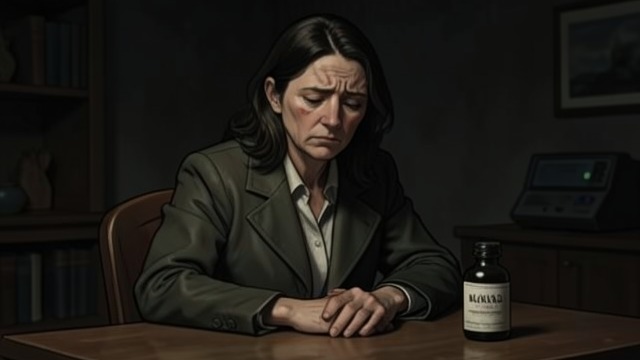
Addiction and Survival
A life derailed
Cheri’s murder profoundly affected Debbi’s life. In the years that followed, she struggled with methamphetamine addiction for nearly a decade, a period that further separated her from the life she had imagined before the killing.
Her story was not simply a straight line from tragedy to recovery. The case records the long consequences of sudden bereavement, including the instability and isolation that can persist after the immediate shock has passed.
Rebuilding a daily life
By the early 2000s, Debbi was working as a prison guard in Texas and had been clean for seven years. Her recovery marked a significant change, but it did not erase the loss or settle the questions surrounding her mother’s death.
Her survival gives the story a measure of forward motion without turning hardship into a simple lesson. Debbi continued to live with what had happened, carrying both the memory of her mother and the consequences of the years that followed.
The Killer’s Larger Reach

The Killer’s Larger Reach
Learning the murders were linked
In the early 2000s, true-crime television programs introduced Debbi to the possibility that her mother’s killer had committed other crimes. She had not previously been told that Cheri’s murder might belong to a broader series.
The new information changed the scale of the crime but did not change the fact that Debbi had lost her mother in one violent night. A wider case history could explain investigative connections; it could not provide the conversation the two of them never had.
DNA and an unfinished history
In 2011, DNA from the scene of Cheri Domingo and Gregory Sanchez’s murders linked the case to the East Area Rapist / Original Night Stalker. The connection confirmed that the crime was part of a larger series and overturned earlier local theories about other suspects.
For Debbi, the discovery placed her mother’s murder within a statewide investigation while leaving the killer’s identity unresolved in the book’s account. The case’s wider significance emerged at the same time as its personal finality: the family could know more about the crime, but not recover the life it had taken.
1975–July 1981, Santa Barbara County
July 1981, Goleta
The days after the July 1981 murders, Goleta
The years after 1981–early 2000s, Texas
Early 2000s–2011, after the Goleta murders were connected
